Test Trial - A Study of PARG Inhibitor IDE161 in Participants with Advanced Solid Tumors

Recruiting
100 years or below
Female
Phase N/A
3 Locations

Brief description of study

WHAT IS CANCER?WHAT IS MULTIPLE MYELOMA?WHAT IS THE STUDY ABOUT?


What is cancer?

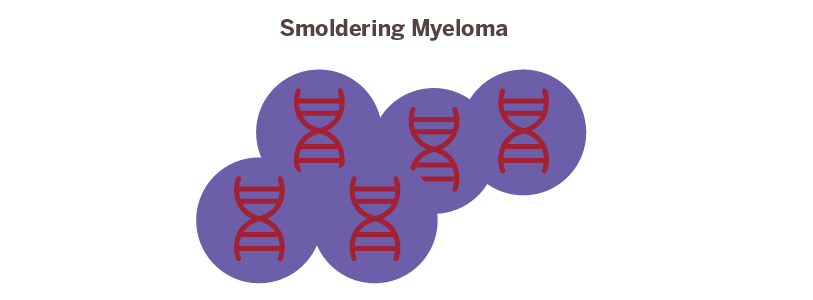
Each cell in your body holds a copy of your DNA. This DNA tells your cells how to do their jobs, like when to copy themselves and when to delete. Your cells copy and delete all the time. This is normal and healthy.
Sometimes during the copying process, a mutation (like a typo) happens in the DNA that your body can't correct. Your cells may begin losing their ability to do their normal jobs, copying too often, and taking up too much space. This is cancer.

Multiple Myeloma is cancer of the plasma cells
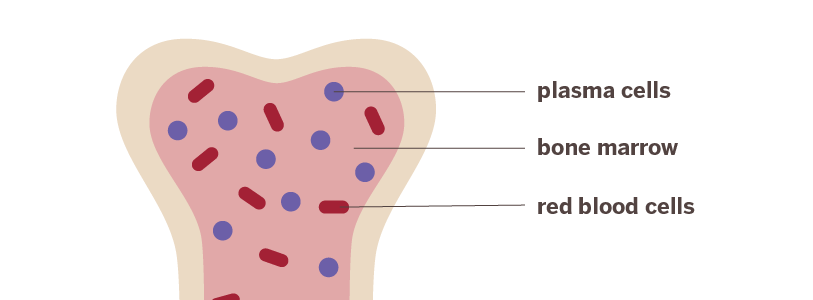
Plasma cells are a type of white blood cell that help fight infections by making antibodies. They are created in the bone marrow.
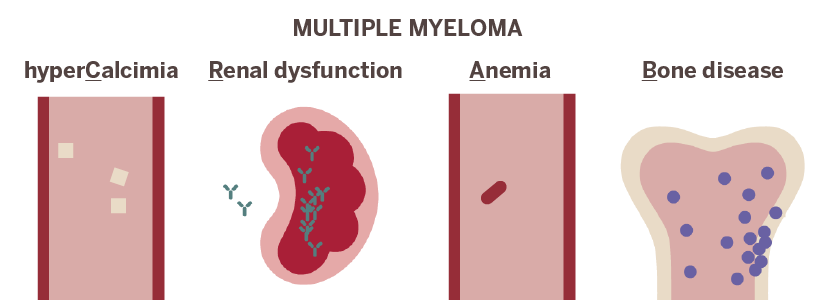
As the mutated plasma cells grow out of control, they take over the bone marrow, leaving less space for red blood cells. This leads to a condition called anemia, which is when the blood doesn't have enough red blood cells. Red blood cells carry oxygen through the body. Without enough red blood cells, the body can't get enough oxygen.
The mutated plasma cells also may take over the bone,causing pain and bone fractures. As the bone breaks down, calcium leaks into the blood. High calcium in the blood is called hypercalcemia.
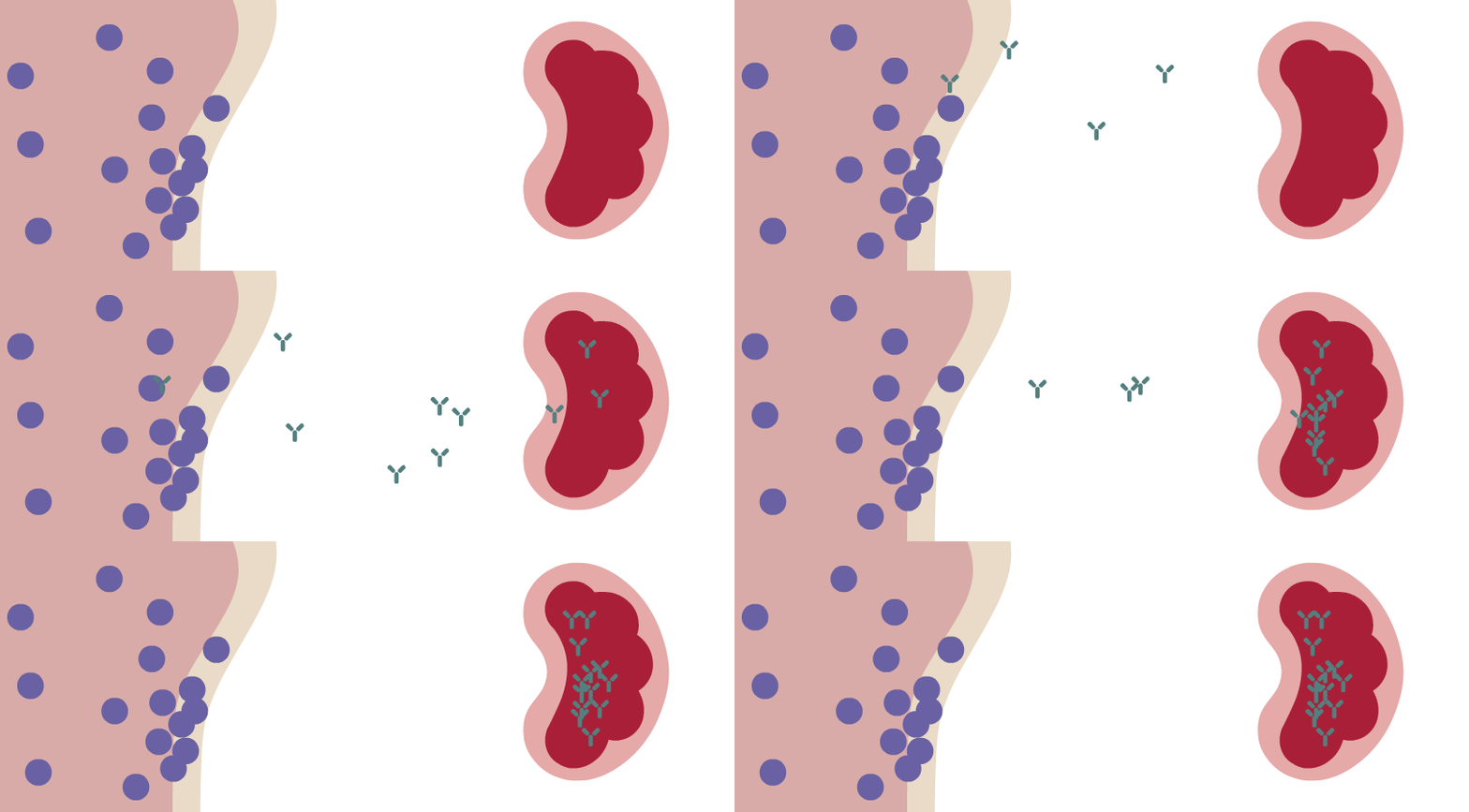
Mutated plasma cells make an abnormal antibody called M-protein (monoclonal protein), which can cause blockages in the kidneys. This can lead to kidney dysfunction and failure.
Multiple Myeloma happens over time, usually several years. At the early stages, it is called MGUS.
As more and more plasma cells get mutations, it develops into a stage called Smoldering Myeloma.
Active Multiple Myeloma is diagnosed when one or more of the main symptoms (called CRAB symptoms) start to develop. These symptoms are hypercalcemia, renal (kidney) dysfunction, anemia, and bone disease.

There's still a lot we don't know about Multiple Myeloma. That's why research is so important.

The Indiana Myeloma Registry is a study to better understand:
  • Who is most likely to get Multiple Myeloma?
  • What treatments work for which people?
  • What causes Multiple Myeloma?
We hope to improve treatment and, one day, find a cure.
If you have Multiple Myeloma, MGUS, Smoldering Myeloma, or other plasma cell disorder, please consider joining the study.

Study Parts

SALIVA SAMPLE
HEALTH HISTORY
QUESTION­NAIRE
QUALITY OF LIFE
QUESTION­NAIRE
APPROVAL TO LINK TO YOUR MEDICAL RECORD
We'll mail you a kit!
One time: online or by phone
Every 3-12 months: online or by phone
So we can follow how your treatments go without you doing extra work!

Study Eligibility

You are eligible if these things are true about you:
  1. You are a male or female patient age 18 or older at the time of informed consent
  2. You have been diagnosed with or are suspected to have one of the following:
    • Monoclonal Gammopathy of Undetermined Significance (MGUS)
    • Smoldering Multiple Myeloma
    • Multiple Myeloma
    • Bony or Soft Tissue Plasmacytoma
    • Primary Amyloidosis
    • Plasma Cell Leukemia
    • Other Plasma Cell Dyscrasias (including but not limited to light chain deposition disease, monoclonal gammopathy of renal significance, POEMS syndrome)
If you have questions about the study, email myeloma@iu.edu or call 317.278.0808.
Click here to sign up

Eligibility of study

You may be eligible for this study if you meet the following criteria:

  • Conditions: acne
  • Age: 100 years or below
  • Gender: Female

Inclusion Criteria:
Exclusion Criteria:

Updated on 04 Aug 2024. Study ID:

Find a site

Since this trial requires contact information verification, you will receive an email with the information you provided asking for your validation. Only after this verification step your referral will be sent to the study site selected.

To verify your phone, please use one of the verification methods below:

Send text message Send automated call

You have contacted ,

,

Send a message

Enter your contact details to connect with study team


Email

View email

Phone

Phone country flag

View phone
Investigator Avatar

Primary Contact

First name*
Last name*
Email*
Phone number*
Zip Code
Please provide your 5-digit zip code
0 0 /250
Other language

Interested in the study?

Select a study center that’s convenient for you, and get in touch with the study team.

Connect with the study team